Tripadvisor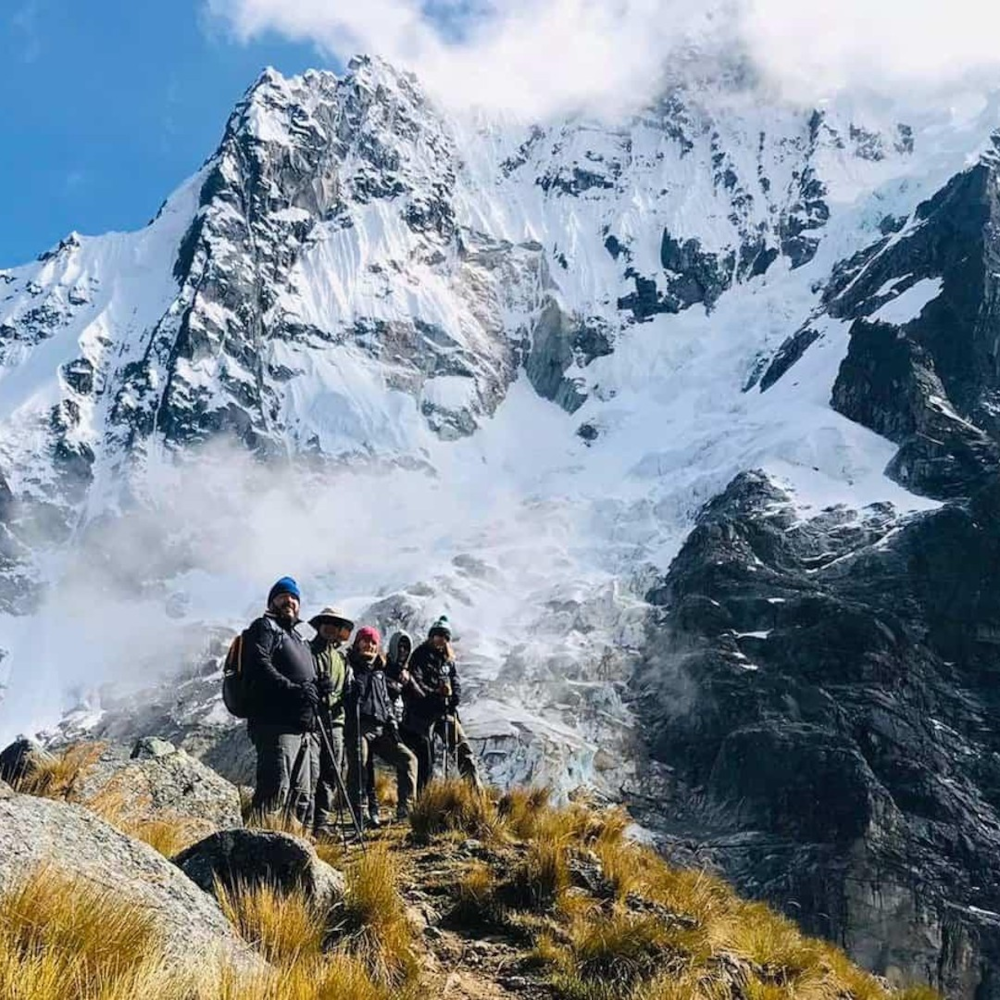


Everyone dreams of that first moment seeing Machu Picchu rise from the clouds. However, what in case the trip there was equally spectacular? Out of the trains and the sold-out Inca Trail, there is one more variant and many experienced hikers refer to it as the most stunning secret in Peru. A private Salkantay Trek makes the trip more personal, defined not only by the destination but by the glaciers, valleys, and mountain passes along the way.
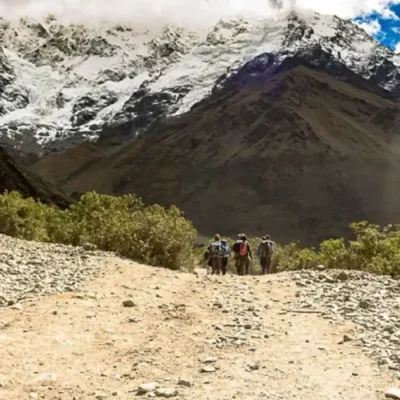
This path has been ranked to be among the 25 Best Trends to Trek the World by the National Geographic Adventure Travel Magazine. The path presents a scenic effect, with turquoise lakes of the alpines under 20,574 feet mountain and green jungle of Machu Picchu. It is a picturesque path and there are fewer people and more sight.
Choosing a private Salkantay Trek turns a great trip into a smoother one. “Private” isn’t just about comfort—it’s about pacing and safety. At high altitude, it is important that you move at your pace. Having a committed coach, one can listen to the body and make the process more pleasant.
This report will provide you with a good idea of the challenge, the altitude training, and what to expect on a daily basis, and thus you will be able to determine whether this is the activity you would enjoy.
Salkantay Trek vs. Inca Trail: Which Epic Path is Right for You?
The Machu Picchu Inca trail is the most popular route when people dream about the expedition which they plan to make in the Machu Picchu. But it is not the only approach to the Lost City–if it is not even the best. A good alternative is the Salkantay Trek, which is very wild with glaciers and spectacular mountainous terrain. It is just a matter of the type of adventure you are seeking to find in order to make the best choice.
This ends up boiling down to a trade off of history vs scenery, planning vs flexibility. Whereas the Inca Trail is also a journey through history, the Salkantay trail is an experience of the majestic amphitheater of nature. At a glance the comparison between them is as follows:
- Scenery: Salkantay also has dramatic alpine scenery and a drop to tropical forest environments. Inca trail is valued because it has its historical remnants and the traditional cloud forest.
- Groups: The Salkantay Trail is much less crowded, which provides a larger feeling of isolation. The Inca trail is ever crowded because of its popularity.
- Booking: Salkantay has a great flexibility. Inca trail needs to be booked 6-8 months prior.
The cause of that significant variation in booking is government permits. The Peruvian government realizes that to preserve the ancient stone path, it issues a specific number of passes to the Inca trail per day which are limited and sold almost right after being announced. Another limitation with the Salkantay Trail is that there is none, and this is where you get to experience tremendous freedom in planning your trip. Whenever one considers spontaneity and awe-inspiring, varied topography, Salkantay cannot be a backup plan, as it is the best one.
The Real Value of a Private Trek: Why “Your Pace” is Everything at Altitude
You might think a private Salkantay trek is about exclusivity, but its real value is practical: control over your pace. When you are at high altitude, your body would take time to adapt itself to thin air, which is known as acclimatization. The most effective pace is a slow gradual rhythm. You tend to run away in big crowds in order to keep pace or to wait. A private trek removes that pressure, letting your body adapt naturally and safely.
Such flexibility is also a significant safety benefit. Altitude sickness may present itself in the effects of a hangover and it may start with a mild headache or sickness that can be like a hangover. Those signs are not difficult to overlook in a large crowd. With a private guide, you get full attention. They are able to notice the slightest changes and change the plan in a minute, either adding a break or slowing down so that you can be healthy and comfortable.
Beyond safety, a private trek makes the journey truly yours. Adore the sight in a glacial lake of turquoise colour? Stay longer. Need to have an early morning revealing the sunrise behind the mountains? You can. This liberty makes the journey a kind of voyage of self. Rather than being pushed about by a strict routine, you create the experience and there is no time to waste.
4-Day vs. 5-Day Salkantay Trek: Choosing Your Adventure’s Pace
The decisions you will make among the first things to do in making your trip plans are the booking of a 4-day or 5-day Salkantay trek. This is not much of a difference, but it makes your hike feel different and makes a huge difference in preparation. It is not really about where you go, but the destination is secondary to how you feel about it.
The 5 day trek is a better alternative to most hikers. This will be adopted at a relaxing time and hence acclimatizing. The first day is an easy half day hike to Soraypampa. The additional evening and night of the altitude allow your body to settle and prepare before the most difficult climb. A 5-day itinerary will allow you to enjoy the scenery rather than merely smuggle through the scenery.
The 4-day hike is a fast track to the trip of the people who are very fit and well acclimatized and have little time. It combines the first two days to one long arduous excursion. You arrive at Soray pampa and continue on and this makes it a hard beginning. It is gratifying, but there is little room in it when altitude comes into play with you.
Your Journey Day 1-2: From Turquoise Lakes to the Mighty Salkantay Pass
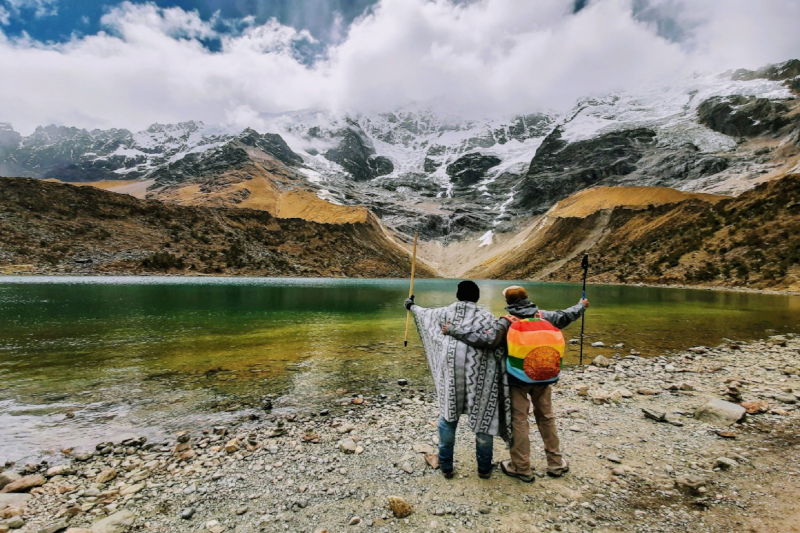
In a high altitude valley, you start your adventure and find yourself settled in your first camp under the snow-covered Salkantay mountain. On the same afternoon, a short but steep acclimatization hike to the Humantay Lake can be selected. One of the most photographed sites in the Andes is its bright turquoise waters under a floating glacier and a breathtaking preview of what is to be seen in the Andes.
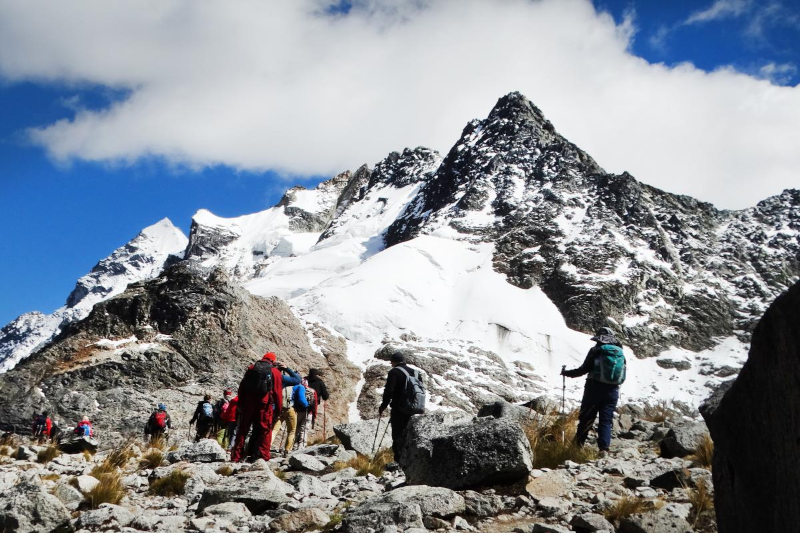
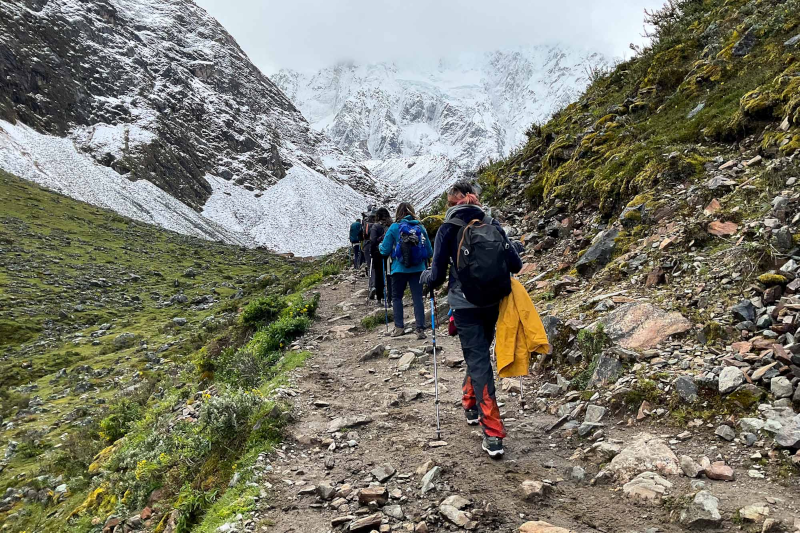
The next morning is the most challenging part of the trek when you will be hiking to Salkantay Pass which is the highest point of the trail. It is never a race as the air becomes thinner and every step is concentrated. Your guide will walk at a gradual pace to make sure that your body adapts progressively to the increase in elevation.
It is a real victory to get to 4,600 meters (15090 ft) above sea level, and to be rock- and ice-covered and encircled by the open sky. It is the emotional peak of the hike to many hikers. Then it changes swiftly on the way down–the cold alpine land yields to the warmer air, green vegetation and the first broods of the cloud forest upon the brink of the jun.
Your Journey Day 3-5: From Alpine Peaks to Jungle and Machu Picchu’s Doorstep
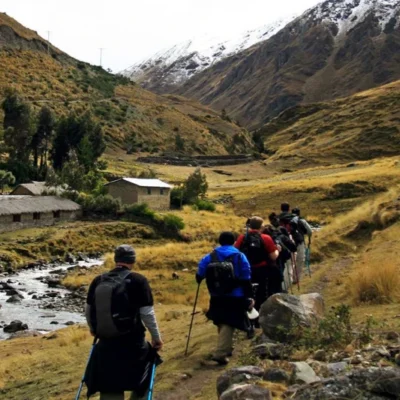
You leave the frozen mountains to drop into a new world on your third day. The path cuts into the ceja de selva–the cloud forest–where the moist hot wind takes the place of the mountain cool. The trees are covered with moss and exotic birds are able to be heard and waterfalls and orchids adorn the road ways. At every turn, the scenery gains more life.
It is a productive region as well as sustaining a local agro community. One of the highlights that one can have is visiting a small coffee farm owned by a family. You watch it all the way to the cup and even roast and grind your own coffee. Having a fresh brew in the field where the brew is produced is a significant cultural touch and acts as the point of origin of the local tastes.
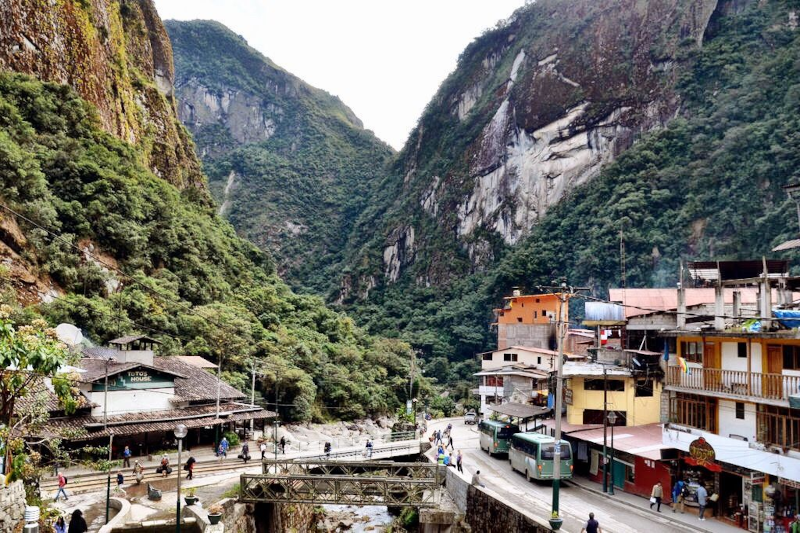
The concluding leg traces a section of an original Inca trail along the Vilcanota River with occasional views of the mountains that encircle Machu Picchu. The expedition culminates in the bustling town of Aguas Calientes, which lies beneath the ruins. A hot shower, good meal then a comfortable bed is a pleasant thing after days on the trail.
A combination of anticipation and pride will hit you as you relax to go to bed. You have traversed rugged sceneries and mountain ranges to get on the threshold of a Wonder of the World. It is time to take a break and prepare Machu Picchu at sunrise.
Are You Fit Enough? An Honest Guide to Salkantay Trek Difficulty and Training
The biggest dilemma to most trekkers is: Is it that I am fit enough? The Salkantay trek is as a rule either moderate or demanding, though it primarily refers to stamina. No speed or technical prowess is involved but a matter of hiking 6-8 hours daily on rough land over a few days. When you are able to take a few walks with some hills around your place, you are already in a great starting point.
You do not have to be a sports star, you just need to be prepared to work every day. An easy 2-month preparation plan would be effective:
- Cardio (3x/week): Walking, jogging, riding on the bicycle, or in the elliptical, 3045 minutes, around briskly to develop endurance.
- Long increases (1/week): begin with 2 -3 hours and increase to 6- 8. Wear your trekking shoes and put weight in a daypack.
- Strength (2x/week): To make legs and the core stronger, squats, step-ups and lunges are used.
You see, it is a race of turtles. Your private guide will set a comfortable pace so you can breathe and enjoy the scenery. Fitness is also important, though the other defining aspect is preparing for altitude, and such a path will have to be approached differently.
How to Beat Altitude Sickness: A Simple 3-Step Prevention Plan
Although it is not always about physical fitness, acclimatization is the actual key to living with the altitude of Salkantay trek – to allow your organism to be used to thinner air. Imagine it is getting into a cold pool rather than leaping in. Thus, it is the golden rule not to eventuate on your trek by spending at least two, preferably three days in Cusco (11,152 ft / 3,399 m) prior to your journey. One of the best preparations you can make is to go in the city at a slow pace.
When you are on the trail it is your mantra to walk slowly. Going back is energy efficient and makes your body adapt. Plenty of water and coca tea is also promoted by the guides and coca tea is a traditional Andean herbal drink that has been used over the years to alleviate mild cases of altitude discomfort. Proper hydration and slow pacing are the keystones to the prevention of altitude sickness.
A private trek gives you a guide focused entirely on your well-being. They are able to detect the early symptoms and slow or speed up the pace. The greatest test is the Salkantay Pass, which is at an elevation of 15090 ft (4600m), and you remain at this altitude a short time before going down, and this allows your body to recuperate.
What to Pack: The Smart Layering System for Mountains and Jungle
The question of what to take to the Salkantay trail may be confusing because you will be traversing cold mountainous regions to the jungle coastline which is hot and humid. It does not presuppose a huge wardrobe, but rather a clever layering system. Wear three five layers: a moisture-wicking base layer, a warm mid-layer such as fleece, and a waterproof outer shell so that you can switch to the weather changes. One golden rule: avoid cotton. it elasticates the wet and makes you chilled. Select fabrics that keep you dry and comfortable; choose wool or synthetic materials.
You will not be carrying huge backpacks most of the time either. On private treks, a simple two-bag system is used. You carry a small day pack with daily necessities, such as water, snacks, sunscreen and a rain jacket to carry you up the mountain; whereas your duffel bag holding your other clothes and toiletries is carried using pack mules in between the campsites. You walk light and come home with clean and dry clothes every evening.
You will be provided with a comprehensive packing list upon your booking but there are certain things that are a no-go. Hiking boots are the most significant. Their break in and their waterproofing should be good. No wonder when starting a multi-day hike to use with your new pair of boots.
Essential Gear Checklist
- Broken-in waterproof hiking boots
- Trekking poles (highly recommended for descents)
- Rain jacket and pants
- Sun hat, sunglasses, and sunscreen
- Insect repellent (for lower elevations)
- Headlamp for evenings at camp
- Reusable water bottle or hydration bladder
- A small personal first-aid kit
How Much Does a Private Salkantay Trek Cost?
While prices vary, a high-quality, all-inclusive private trek usually ranges from $800 to $1,500+ per person. It is an indication of a fully sponsored adventure whereby the logistics will be taken care of so that you can concentrate on the scenery and the accomplishment. Consider the price as not only a trail fee, but a smooth Andean adventure throughout.
Such a price is much higher than most anticipate. It usually has a professional guide, a cook making fresh food, and porters and mules to deliver camping equipment and main luggage. Flights, Machu Picchu entry, transfers to Cusco by train/buses, and a hostel/hotel in Aguas Calientes are usually provided also.
When comparing private trek companies, price often signals quality and ethics. Respected operators are kind to their employees, paying them better and providing adequate equipment. Companies that treat their staff well tend to provide improved safety, service and experience in general- in addition to promoting the local community in a positive sustainable manner.
Is the Private Salkantay Trek Worth It? Your 3-Step Plan to an Unforgettable Adventure
What may have once seemed like a distant dream—Machu Picchu—is now a tangible goal. The journey there is not a crowded race, but a personal adventure winding beneath snow-capped giants. The Salkantay Trek is a choice for those who value wild scenery as much as ancient stones, empowering you to decide how you want to arrive.
So, is the Salkantay trek worth it? For the adventurous spirit, the answer is a resounding yes. The feeling of earning your view of Machu Picchu is an unforgettable reward. You can shift from dreaming to doing by planning a Salkantay trek today.
Your 3-Step Action Plan:
- Choose your ideal travel window (the dry season is April-October).
- Start your training (begin with a 2-hour walk this weekend).
- Contact a reputable trek operator with your questions.
This adventure doesn’t begin at a trailhead in Peru; it begins with the decision to take that first, simple step. Every walk you take builds toward an experience that will redefine what you think is possible. The mountains are waiting.